
 EN



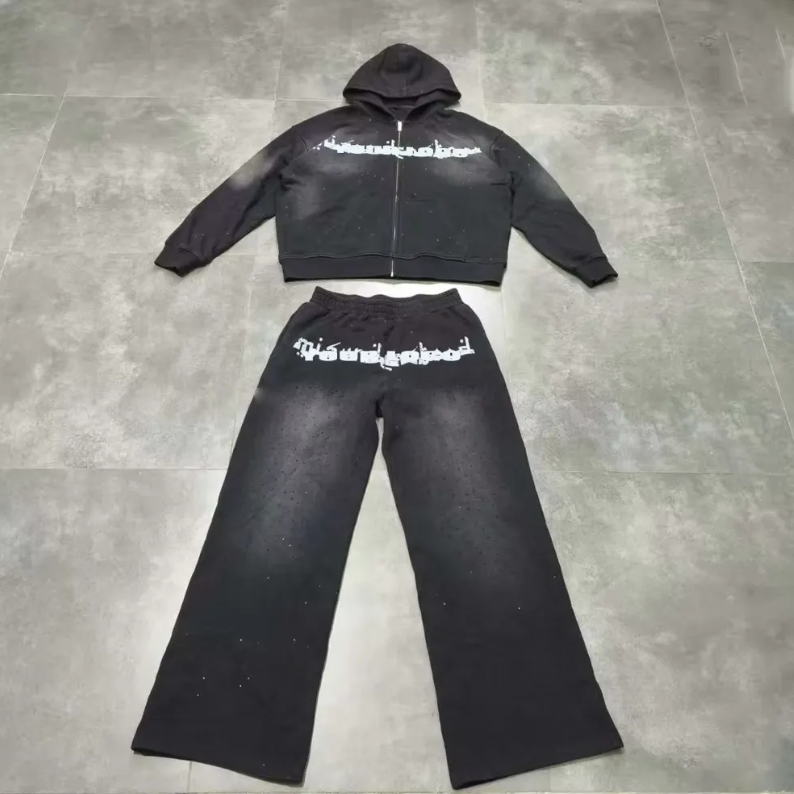
Shrinkage Can Wreck a Perfect Pattern
When a sweatsuit pattern is graded and approved, it fits a set of body measurements. If the fabric shrinks after washing, those measurements change. A medium hoodie can turn into a small. A jogger inseam can lose 2 cm. Bulk orders multiply that error across thousands of units. Retailers return the goods. Brands absorb the loss. Shrinkage testing before cutting is not a paperwork step. It is the last chance to correct the pattern or choose a different fabric.
What Actually Happens When Fabric Shrinks
Cotton fibers swell and relax when wet, then contract as they dry. Heat accelerates the process. Knit fabrics shrink more than woven because loops can pull tighter. Polyester shrinks less but can still move under heat. Blends behave differently depending on fiber ratio, yarn twist, and finishing. A 100% cotton fleece may shrink 5 to 8 percent in length. A cotton/polyester blend may shrink 2 to 4 percent. Spandex adds recovery but can also cause growth in some constructions. The mechanism matters because two fabrics with the same fiber content can shrink at different rates if the knitting or finishing differs.
The way a fabric is finished also matters. Compacting, calendering, and resin treatments can reduce shrinkage. But those processes add cost and can change hand feel. A mill may offer a low-shrink finish, but it is not permanent. Repeated washing can still move the fabric. That is why testing must match the customer's care instructions. A cold wash and hang dry will show different results than a hot wash and tumble dry. If the care label says tumble dry low, the test should use tumble dry low. If the test uses a different method, the numbers are useless.
Pre-Cutting Tests vs Post-Production Surprises
Testing before cutting is standard in good factories. A swatch is washed according to a defined method, dried, and measured. AATCC 135 and ISO 6330 are common home laundering standards. ASTM D3776 covers fabric weight, and ASTM D3774 covers width. These tests give a shrinkage percentage. That number is then applied to the pattern. If length shrink is 4 percent, the cut length is increased by 4 percent. If width shrink is 3 percent, the marker is adjusted. Skipping this step means the bulk order runs on hope. Post-production testing only tells what went wrong. Pre-cutting testing prevents the wrong goods from being made.
Some buyers ask for a garment wash test instead of a fabric test. Garment washing is more accurate because it includes sewing thread, trims, and construction. But it takes longer and costs more. Fabric testing is faster and cheaper, and it catches most problems. A good factory will do both when the order value justifies it.
Typical Shrinkage by Fabric Type
Not all sweatsuit fabrics behave the same. The table below shows common ranges from bulk testing. Actual numbers depend on the mill, dye house, and wash method.
| Fabric | Typical length shrink | Typical width shrink | Notes |
|---|---|---|---|
| 100% cotton fleece | 5 to 8% | 3 to 6% | Higher with hot wash |
| Cotton/polyester 60/40 | 2 to 4% | 2 to 3% | More stable |
| Cotton/polyester 50/50 | 1 to 3% | 1 to 2% | Good for low-shrink |
| French terry with spandex | 3 to 5% | 2 to 4% | Recovery affects fit |
| Tri-blend cotton/poly/rayon | 4 to 7% | 3 to 5% | Rayon adds movement |
Those ranges are starting points, not promises. A 60/40 blend from one mill can shrink differently from a 60/40 blend from another mill. Yarn count, knitting gauge, and dye house finishing all shift the result. That is why a test report from last season cannot be reused for a new dye lot. Every bulk sweatsuit order needs its own test.
A Bulk Order That Skipped the Wash Test
A few seasons back, a factory in southern China cut 2,000 sweatsuit sets for a European brand. The fabric was a 320 gsm cotton/polyester fleece. The sample passed a fit check. The bulk order was cut without a full wash test. After the first home laundering, the hoodie body length shrank about 5 percent and the jogger waistband lost elasticity. Retail feedback was immediate. The brand had to reorder and discount the first run. The root cause was not the fabric supplier. It was the missing pre-cutting test. A simple wash and measure step would have caught the issue before the knife touched the fabric.
Making Shrinkage Testing a Non-Negotiable Step
Good manufacturing treats shrinkage as a design input, not a final inspection. Buyers should ask for wash test reports before bulk cutting. Factories should test every dye lot because finishing changes can shift shrink rates. If a fabric is borderline, the pattern can be adjusted or the wash instructions can be updated. No test can eliminate all risk. Some fabrics continue to shrink after multiple washes. Blends with high rayon or loose knits are less predictable. The goal is to reduce surprises, not to promise perfection.
Xinsheng, based in Humen Town, runs shrinkage testing as part of its sampling and bulk process for men's sweatsuit orders. In-house sampling, a 200+ fabric library, and GRS-compliant options help brands lock the fit before cutting begins.