
 EN
EN



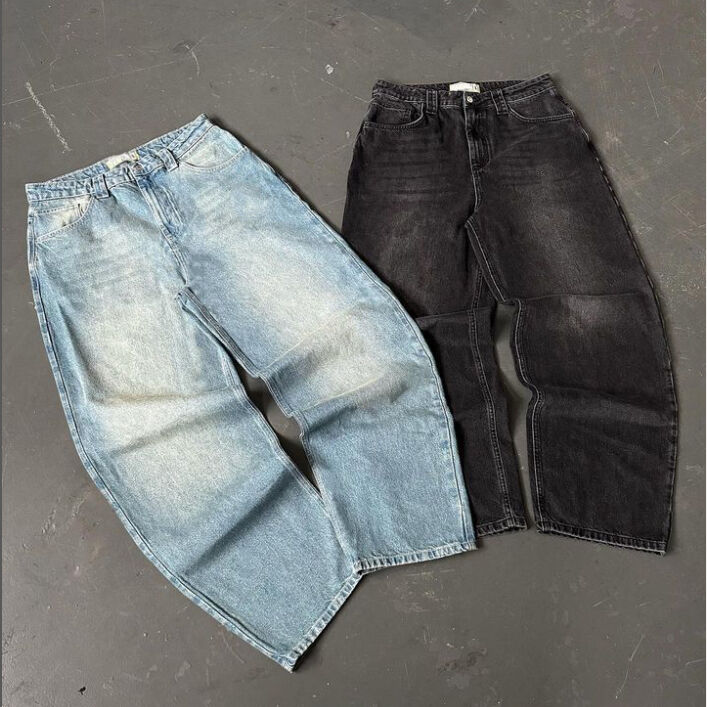
When sourcing pants, especially denim, the finishing process is where a standard garment is transformed into a product with character, comfort, and market-ready appeal. For brand owners and product managers, understanding these techniques is crucial—not for DIY application, but for making informed sourcing decisions that directly impact product quality, cost, and consistency in bulk production. The chosen finish fundamentally defines the hand-feel, aesthetic, and performance of your final product.
Finishing refers to the final series of chemical and mechanical treatments applied to fabric or garments to achieve specific aesthetic and tactile qualities. For pants, this goes far beyond simple cleaning. It's a deliberate, technical process designed to create replicable effects like softness, targeted fade patterns, and a broken-in comfort. Let's break down two of the most common and impactful techniques: stone washing and enzyme washing.
Stone Washing: Creating Vintage Character
Stone washing is the classic method for giving pants, particularly denim jeans, a vintage, worn-in appearance. The process is mechanical: garments are loaded into large industrial washing machines along with porous volcanic stones (pumice) or synthetic alternatives.
As the machine rotates, the abrasive action of the tumbling stones against the fabric creates localized abrasion and fading. This mimics years of natural wear, producing highlights on raised seams and edges while softening the stiff hand of raw denim. The degree of contrast and abrasion is controlled by the size, type, and quantity of stones used, as well as the washing duration. In bulk production, a key consideration is managing the potential for minor fabric abrasion—this contributes to the authentic look but must be carefully monitored to avoid garment failure or unacceptable strength loss.
Enzyme Washing: The Controlled, Softer Alternative
Enzyme washing, often called bio-washing, offers a more controlled and environmentally friendly route to a softened, faded look. Instead of relying solely on physical abrasion, this process uses cellulose enzymes—biological catalysts that selectively break down the surface cellulose fibers of cotton.
Think of these enzymes as meticulously trimming the tiny fiber fuzz on the yarn surface. This results in a smoother, cleaner fade by removing indigo dye trapped in those loose fibers, and it imparts a lasting, uniform softness to the fabric. The process is gentler on the garment’s structure than traditional stone washing, leading to less tensile strength loss and reduced wear on washing equipment. It can be used alone for an even, overall fade or combined with stones (enzyme stone wash) to achieve a softer version of the classic stone-wash effect.
For brands focused on batch-to-batch consistency and preserving fabric integrity, enzyme washing provides a highly replicable and manageable process, which is crucial for ensuring every unit in a large production run meets the same standard.
Beyond the Basics: A Spectrum of Finishes
While stone and enzyme washes are foundational, the modern finisher's palette is broad. Each technique can be tailored to create a distinct product profile:
Sand Washing
This technique uses special chemical softeners and mild abrasive materials to raise a dense, soft layer of micro-fuzz on the fabric surface. It gives pants an incredibly soft, suede-like hand-feel and a gently worn appearance.
Chemical Washing
Utilizing strong alkalis like sodium hydroxide, this process aggressively strips dye to create pronounced, high-contrast fading and a significantly softened hand. It requires precise control to achieve consistent results.
Bleach Washing
Employing oxidative agents like sodium hypochlorite or potassium permanganate, this method creates stark, localized bleaching effects. It is used for "snow" or "ice" wash looks, where dramatic white patterns are set against a dark denim background.
The Modern Shift: Performance and Sustainability
Contemporary finishing is increasingly defined by precision and environmental responsibility. The industry is adopting technologies that enhance reproducibility while minimizing ecological impact. Laser finishing, for example, uses computerized lasers to engrave precise fade patterns, whiskers, or even holes without water or harsh chemicals. Advanced enzyme formulations work effectively at lower temperatures, reducing energy and water consumption. Ozone washing is another technique gaining traction for achieving clean, bright fading with a drastically reduced chemical and water footprint.
Why Factory Process Control is Your Most Critical Factor
Understanding these techniques is only half the battle for a brand. The other, more critical half is your manufacturer’s ability to execute them with consistency, control, and compliance at scale. Here’s what truly separates a proficient factory from the rest:
Pre-Production Sampling & Strike-Offs
A professional factory will never proceed with bulk washing based on a verbal description or a digital image alone. They insist on creating multiple physical wash samples ("strike-offs") for your approval. This step locks in the exact formula, processing time, and machine parameters to ensure the 10,000th pair matches the first approved sample perfectly.
Precision in Dimensional Stability
Pants, especially denim, undergo significant stress and shrinkage during aggressive washing. Expert factories meticulously calculate and pre-compensate for this at the pattern-cutting stage. They conduct thorough shrinkage testing on every new fabric lot to guarantee your size specifications are met consistently after washing.
Comprehensive In-House Lab Testing
Reliable partners invest in on-site quality control laboratories. They test washed garments for critical performance metrics, including colorfastness to washing and rubbing, ensuring residual chemicals (like pH) are within safe limits, and verifying that fabric strength (tensile and tear strength) has not been compromised beyond agreed standards.
Chemical Management & Environmental Compliance
Leading manufacturers adhere to international restricted substances lists (RSLs) and have structured systems for chemical inventory and handling. Perhaps most importantly, they operate professional wastewater treatment plants to ensure effluent is properly treated before discharge, protecting your brand from regulatory and reputational risk.
Making an Informed Sourcing Decision
Choosing the right finish for your pants line involves balancing aesthetic vision with practical considerations of cost, minimum order quantities, lead times, and fabric durability. The most reliable path to success is partnering with a factory that demonstrates deep technical expertise not just in offering these washes, but in controlling them.
The true test of a factory’s capability lies in its development sample process. Before committing to a full production order, initiate a development round. This allows you to assess their sampling diligence, communication clarity, and technical ability to translate a reference or idea into a consistent, producible, and quality-tested finish. This step is the most accurate predictor of a successful and stress-free bulk production partnership.
For brands seeking a reliable partner with proven expertise in mastering these complex finishing techniques, Xinsheng Streetwear begins every collaboration with precise sample development. This process is the cornerstone of transforming design concepts into consistently high-quality bulk production for global streetwear and denim brands.
Exploring a specific wash for your next pants collection? We recommend visiting the Xinsheng Streetwear official website to review detailed craftsmanship cases. For a direct assessment of your project's feasibility, please use the contact information on the site to initiate a technical consultation and sample development request. A professional sample development discussion will demonstrate production control and collaborative potential more clearly than any general description.