
 EN



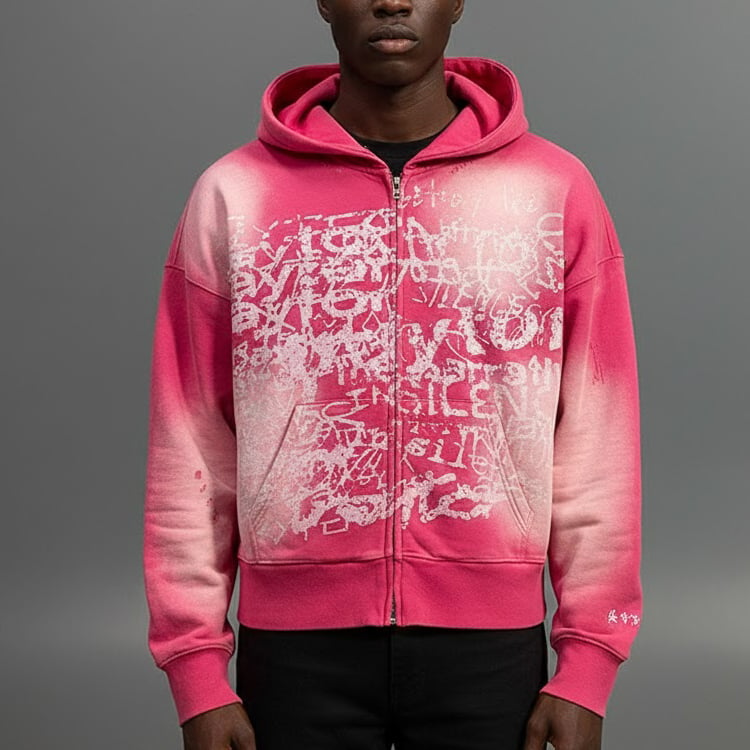
What a Wash Test Reveals That a Dry Sample Cannot
A hoodie can look perfect on a hanger and still fail after the first wash. Wash testing is not about proving a fabric is good. It is about finding out how the fabric, stitching, print, and trim behave together when a customer follows the care label. A dry sample only shows the factory floor version of the garment. A washed sample shows the version that reaches the customer after real use.
For custom hoodie programs, that difference matters. Cotton fleece can shrink unevenly. Pigment dyes can shift. Puff print can crack. Zippers can pucker. A wash test puts those risks on the table before bulk production locks in thousands of units.
Why Hoodie Fabric Behaves Differently After Washing
Hoodie fabrics usually have loft, stretch, and a brushed or looped back. Those qualities come from yarn structure and finishing. When water, heat, and mechanical action hit the fabric, fibers relax. Residual shrinkage from knitting and dyeing releases. The garment changes. Sometimes the change is small. Sometimes a size medium becomes closer to a small.
The reaction depends on fiber content, knit density, dye method, and wash recipe. A heavyweight cotton fleece may shrink more than a cotton poly blend. A garment-dyed hoodie may lose more color than a piece-dyed one. A vintage wash can soften hand feel, but it can also distort ribbing. No spec sheet predicts every result. A wash test does.
Industry standards such as AATCC TM135 and ISO 6330 exist because wash conditions need to be repeatable. They define temperature, cycle, detergent, and drying method so results can be compared. Using those methods does not guarantee a perfect hoodie. It does make the test meaningful.
The Real Risks Hiding in Shrinkage, Color, and Hand Feel
Shrinkage is the most obvious risk, but not the only one. A wash test can expose:
-
Length and width changes that break the size chart.
-
Color fading, bleeding, or cross staining on drawcords and panels.
-
Print cracking, peeling, or dulling after agitation.
-
Embroidery distortion or puckering around dense areas.
-
Ribbing stretch or recovery loss at cuffs and hem.
-
Trim corrosion, zipper tape shrinkage, or label curling.
A recent case involved a midweight hoodie with a large front puff print and a garment-dyed finish. The dry sample passed every check. After one home-style wash, the body shrank past tolerance, the puff print cracked at the shoulders, and the drawcord color bled into the fleece. The root cause was not the print itself. The fabric had not been pre-shrunk enough, and the wash recipe was too aggressive for the dye. The pattern and wash process were adjusted before bulk. Without the wash test, that batch would have reached customers in a condition no brand could defend.
| Checkpoint | Dry sample result | After wash test | Action before bulk |
|---|---|---|---|
| Body length | On spec | Short by measurable amount | Adjust pattern for shrinkage |
| Chest width | On spec | Narrower than tolerance | Review knit and wash recipe |
| Puff print | Clean edges | Cracking at stress points | Change ink, cure, or placement |
| Color | Target shade | Faded or bleeding | Recheck dye method and rinse |
| Hand feel | Soft | Stiff or rough | Adjust softener or wash cycle |
| Ribbing | Good stretch | Loose or wavy | Change rib gauge or recovery test |
How a Wash Test Fits Into Sample Development
Wash testing should not be a final hurdle. It belongs inside sample development. A smart sequence looks like this:
-
Approve the base fabric and hand feel.
-
Make the first sample with the intended print, embroidery, and trims.
-
Wash the sample using the expected care method.
-
Measure, inspect, and document every change.
-
Adjust pattern, fabric, or wash recipe.
-
Repeat until the washed sample matches the approved standard.
That cycle takes time, but it prevents a much larger loss. Bulk production runs on fixed patterns, ordered fabric, and committed delivery dates. A wash failure found after cutting is expensive to fix. A wash failure found during sampling is a normal part of development.
Limitations exist. A lab wash test cannot copy every customer habit. Some people wash hot, dry on high, or use harsh detergent. A wash test reduces risk. It does not eliminate it. The goal is to understand the margin and decide what tolerance is acceptable.
What to Check Before Approving Bulk Production
Before signing off on a hoodie program, the washed sample should be compared side by side with the original approved sample. The review should cover measurements, color, print integrity, embroidery, trims, and hand feel. Photos and written records matter because memory fades and factories change. A simple internal wash standard, based on AATCC or ISO methods, keeps future orders aligned.
Buyers should also ask how the factory handles fabric lots. A new dye lot can behave differently even when the composition is the same. Pre-production wash checks on the actual bulk fabric are a practical safeguard. They are not a sign of doubt. They are a sign of experience.
Turning Wash Testing Into a Brand Advantage
Consistency after washing is a quiet selling point. Customers may not praise a hoodie for keeping its shape, but they notice when it does not. Returns drop. Reviews improve. Repeat orders become easier. Wash testing protects the size chart, the print design, and the brand promise that a hoodie will look right after normal care.
For brands that want this level of control, Xinsheng in Humen works as a men’s apparel manufacturing partner with in-house sampling, bulk production, and finishing capabilities that include printing, embroidery, rhinestone, puff print, and washing. A tested fabric library and flexible MOQs support both new labels and larger programs. The real advantage is not one wash recipe. It is the habit of checking the garment after washing, before the bulk order makes the decision permanent.