
 EN
EN



Design Support That Goes Beyond Copying a Sample
A serious streetwear manufacturer does more than stitch fabric together. The best partners get involved before the first pattern is cut, helping brands refine silhouettes, adjust proportions, and select construction methods that match the intended price point. This early-stage input often separates a garment that looks good on a rack from one that fits real bodies and survives repeated wear. A factory team with pattern-making expertise can spot issues like sleeve pitch problems or collar roll inconsistencies that a sketch cannot reveal. For a brand launching its first collection, that kind of design support reduces the number of sampling rounds and prevents expensive mistakes later.
Fabric and Material Sourcing as a Custom Service
Sourcing fabric is where many new streetwear brands stumble. A design may call for heavyweight French terry or a specific nylon ripstop, but finding a supplier that offers the right weight, hand feel, and color consistency takes time and connections. Professional manufacturers often maintain a fabric library that allows brands to touch and compare options before committing. More importantly, they can recommend alternatives when a requested material is out of stock or fails a performance test. GRS-certified recycled fabrics have become a common request as brands push sustainability messaging, and a manufacturer with an existing certified supply chain saves the brand from starting that search from zero.
Printing, Embroidery, and Embellishment Techniques
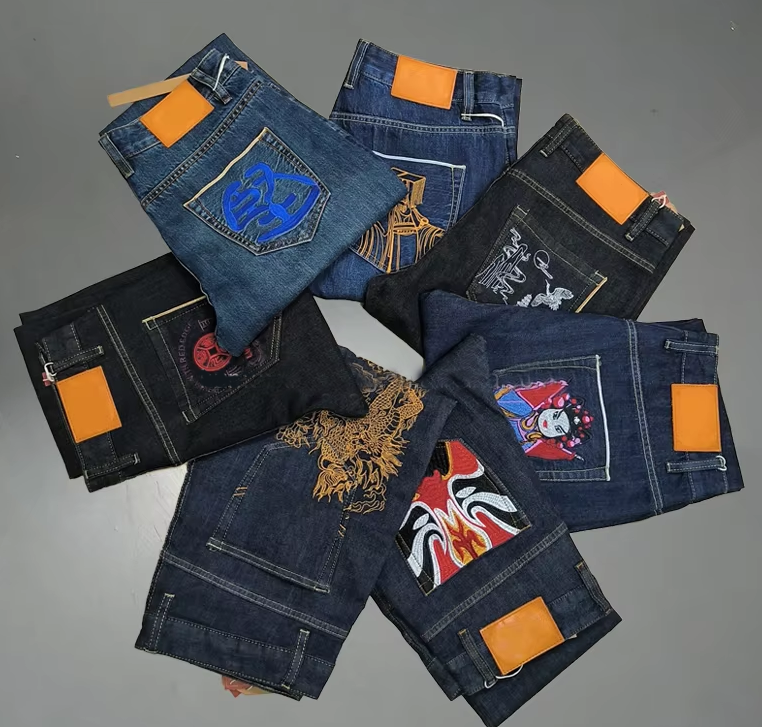
Streetwear lives on graphic identity. The customization menu usually includes screen printing, puff print, embroidery, rhinestone application, heat transfer, and garment washing. Each technique has different setup costs, durability profiles, and visual effects. Screen printing works well for bold, large-scale graphics but can crack over time if the ink is too thick. Puff print adds dimension but requires careful curing to avoid flattening in the wash. Embroidery offers a premium look on logos and small chest marks but struggles with tiny text or photorealistic detail. A manufacturer that runs these processes in-house can control quality better than one that outsources embellishment work.
| Technique | Best Use | Durability | Setup Cost | Common Issue |
|---|---|---|---|---|
| Screen Printing | Large bold graphics | Good with proper cure | Moderate | Cracking if ink too thick |
| Puff Print | Raised dimensional effects | Good | Moderate | Flattening in hot wash |
| Embroidery | Logos, small chest marks | Excellent | Low to moderate | Detail loss in small text |
| Rhinestone | High-visibility accents | Moderate | Moderate | Stone loss after abrasion |
| Garment Wash | Vintage hand feel and color | N/A | Varies by process | Shrinkage if not controlled |
Sampling and Fit Adjustments Before Bulk Production
A reliable streetwear manufacturer treats sampling as a critical checkpoint, not a formality. The standard workflow involves a fit sample, a pre-production sample, and sometimes a top-of-production sample for larger orders. Each round allows the brand to check measurements, fabric drape, and construction details against the approved tech pack. Fit adjustments often require subtle changes, like moving a shoulder seam forward by half an inch or raising an armhole by a quarter inch. Those small shifts can completely change how a hoodie sits on the body. Skipping the pre-production sample to save time almost always results in bulk issues that cost far more to fix.
Low MOQs and Scalable Production for New Brands
New brands rarely have the cash flow to order thousands of units per style. That is why flexible minimum order quantities have become a core customization service for streetwear manufacturers. A factory that accepts 50 to 100 pieces per style for a first run lets a brand test the market without overcommitting. Once a style proves itself, the same manufacturer can scale to 500, 1,000, or 5,000 units without changing the construction quality. This scalability matters because switching factories mid-growth often leads to inconsistent sizing and color shifts between production runs.
A startup brand based in Los Angeles provides a useful example. The founder came to a manufacturer with only a rough concept and a hand-drawn logo. The factory team developed the tech pack, sourced a 400gsm French terry from the fabric library, and produced an initial run of 80 hoodies in three colorways. The first drop sold out in two weeks. The second order scaled to 300 pieces per color without any fit changes, and the brand avoided the common pitfall of launching with too much inventory.
Packaging, Labeling, and Compliance Support
Customization does not stop at the garment. Professional streetwear manufacturers often handle woven labels, hang tags, poly bags, and carton markings to match brand requirements. Compliance support is just as important for brands selling into North America or the EU. That includes documentation for fiber content, care labels that meet FTC or EU standards, and certifications like GRS for recycled content. A manufacturer familiar with these requirements can prepare the paperwork before the goods ship, which prevents customs delays and retail chargebacks. Xinsheng operates with exactly that focus, combining in-house sampling, production, and embellishment under one roof to keep quality consistent and communication direct. For streetwear brands that want a manufacturing partner rather than a simple order taker, that integrated approach makes the path from concept to delivery significantly smoother.