
 EN
EN



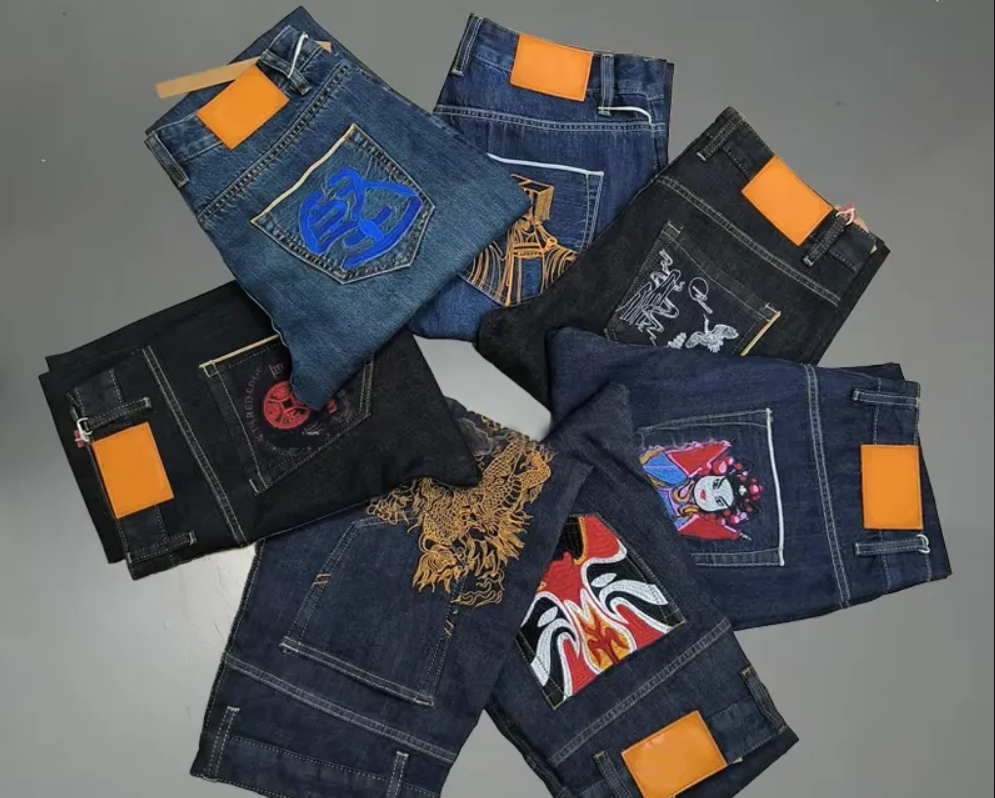
Standing out through customization is a powerful tool for any denim and streetwear brands. Even though washes and finishes grab a lot of attention, branding streetwear and denim with unique pocket designs is still one of the most impactful, yet difficult, forms of branding. Customizing Jeans Pocket Designs is a decorative choice for a brand, but more importantly, it becomes a brand touchpoint that customers interact with every time they wear the jeans. For a bulk order of jeans, there is a need to be careful and precise in order to get a unique pocket design from a sketch into thousands of produced jeans. This guide breaks down the process of transitioning from design to bulk order production and highlights important decisions and factory processes that help ensure a vision is executed consistently and properly.
The Foundation Creative Concept and Technical Translation
All journeys begin with a vision, but for the purpose of this guide, we will focus on the importance of the first stage of early technical translation. This stage, without a doubt, centers on the sketch of the designer and the production floor of the factory.
Let’s start by defining the bespoke pocket’s purpose. Is it for bold branding, understated signature detailing, brand-function uniqueness, or structural weirdness? Once the concept is established, the design must evaluated for manufacturability. Special touch dominate embroideries, overlapped stitch patterns, and oddly shaped pocket bags (where the pockets are stitched, and the hidden pocket bags are not visible) can negatively affect seaming and drape of the jeans. A factory with deep denim experience will quickly recognize possible sewing issues concerning complex stitch patterns, puckering post wash, and atypical pocket shapes that could reduce cutting a factory’s yield. This type of constructive dialogue, with supporting technical sketches and/or digital files, tends to minimize costly revisions and sets up a realistic expectation for sampling.
The Blueprint: Pattern Precision and Prototype Sampling
This is the stage where your two-dimensional design is transformed into a three-dimensional prototype. Accuracy is not negotiable for bulk consistency.
The first physical output is the pattern. A scaled pattern for your custom pocket is created, detailing every curve, angle, and stitch line. This pattern is the master template for every pocket in your order. At the same time, the stitching specs are finalized. This involves thread selection (like heavy-duty polyester for line, stitch type (single stitch for a clean line, chain stitch for a classic roping effect), and SPI (stitches per inch). The factory then does the first physical sample, often sewn onto a basic denim base.
This sample is your first major checkpoint. You are not just approving the look, but checking construction. You are looking for symmetry, sharpness of points, tightness of curves, and alignment on the jeans. You are also checking the feel of the embroidery or stitching and assessing its impact. Approving this sample lets the factory move on to the next and most important step, the wash test sample.
The Important Test: Wash Development and Fit Validation
Jeans are made by their wash, and every feature must withstand it. This stage is the final stress test for your pocket design, and it is paramount to bypass bulk “surprises.”
An assemblage of jeans with the pocket design goes through the wash process that has been planned (stone wash, enzyme wash, etc.). Post wash, the results must be heavily scrutinized. This is where quality control from a factory is tested. Does the embroidery remain intact without excessive fraying or shrinkage? Does the colored thread bleed on the denim? The most important, does the pocket stay flat and smooth with no signs of puckering after the extreme tumbling and drying? The wash may also act on the appearance of stitch tension.
At the same time, the fit of the garment is also validated. Custom pockets with thick embroidery, or with odd shapes, can add unwanted heft or stiffness to a portion of the jeans, potentially obstructing how they move on the body. A factory that specializes in fit consistency will examine this, making sure the design will add value to the product without compromising its wearable comfort. Once the wash and fit test is done, it is a green light for bulk production.
Bulk Execution: Duplicate Scaling and Definite Auditing
Production begins with the approved and wash-tested sample made to absolute perfection. Now, the goal is to replicate perfection thousands of times.
The approved pattern is now used with laser-guided cutters to make every pocket piece the same. For the detailed embroideries, digital files are put into the automated machines, but, in this case, some hand work is necessary to fix thread breaks and to adjust the hoops. In the sewing lines, the quality controllers do in-process checks, and these checks are random in regard to master sample comparison stitch quality, placement accuracy, and symmetry.
Final audits are conducted before the bulk shipment to ensure every piece of finished and washed jeans is up to standard. Auditors use the signed-off sample as the direct reference, checking pockets as well as every component to ensure the pieces are correctly fitted together. This audit assures the Jeans Pocket Designs on the final sample are the same as in the designs after all transformative wash processes, to make sure they will be the same when they get to your warehouse.
From Sketch to Stock: Partnering for Success.
When it comes to customizing denim pockets, there are a lot of moving parts. One-off samples and successful bulk orders stand apart based on the ability to execute on the numerous details. The ability to navigate these specific steps comes from a partner who understands the intricacies of the craft of denim and the discipline of craft at scale.
Everything in this process hinges on the integrity of the development sample. If brands want to make a definitive mark with their denim, the most strategic first step is to initiate a technical development project. We advise collaborating with a seasoned manufacturer to assemble a custom jeans sample set, including a pre-wash prototype and a post-wash validation sample, that will set the standard for the rest of your bulk order.