
 EN
EN


Core evaluation dimensions to judge pant fabric performance and appearance
Any apparel sourcing specialist with long term factory cooperation experience will confirm that fabric material creates the core gap between two pairs of pants with identical cut and sizing. Senior textile consultants who guide global streetwear brands on material selection propose two fixed evaluation layers to compare pant textiles including functional performance and visual aesthetic traits. Functional performance covers stretch recovery wear resistance shrinkage breathability and washing stability while aesthetic traits include surface texture drape color rendering and compatibility with vintage finishing crafts such as acid wash and monkey wash. Many independent brand operators shared real sourcing troubles after testing different fabrics on the same wide leg pant pattern. A brand founder once ordered loose silhouette jogger samples with thin low gram weight french terry and thick heavyweight french terry at the same time only to find the light version lost its shape after three standard laundry cycles while the heavy piece retained its relaxed structured look without sagging knees. Standard testing rules released by ASTM textile testing institute set clear measurement standards for each performance indicator which all qualified garment manufacturers follow during sample development to deliver consistent material performance for brand partners.
French Terry fabric soft comfort and casual street aesthetic traits
French terry remains the most widely used knit fabric for modern streetwear sweat pants and matching sweatsuits and its practical and visual features shift greatly with fabric gram weight ranging from 360gsm to 500gsm. In performance terms this loop back knit structure delivers soft skin friendly touch and moderate horizontal stretch that supports free squatting walking and daily movement without tight restriction. Light weight 360gsm french terry carries strong breathability suitable for spring and summer loose pants yet it comes with obvious downsides including weak shape retention and easy knee bulging after frequent wear. Heavy weight 420gsm and 500gsm options improve structural stability greatly with slower deformation and warmer coverage for autumn and winter collections. On the aesthetic side french terry shows a matte soft knit surface that absorbs vintage washing effects evenly. Factories can apply faded stone wash distressed rips and custom pigment print on this fabric to build casual laid back street visuals that fit baggy flare sweat pants and matching sets favored by young global consumers. The knit texture also creates gentle drape that avoids stiff rigid lines around hip and thigh areas.
Denim fabric structured silhouette and vintage customizable aesthetics
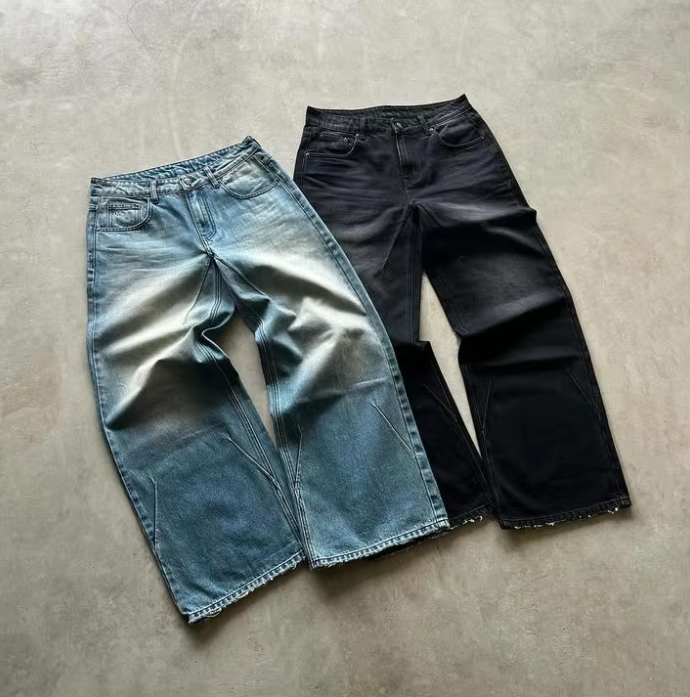
Denim woven twill fabric stands out for its rigid supportive silhouette and rich customizable vintage aesthetics which separate it fully from knit french terry. Pure cotton denim without spandex features excellent wear resistance and distinct diagonal weave texture yet it lacks stretch and requires long wear time to break in for comfortable movement. Blended denim mixed with three to five percent spandex balances sturdy structure and flexible stretch solving the limited mobility issue of full cotton styles. Fabric weight measured in ounces directly changes both performance and look light six to ten ounce denim offers thin breathable texture for seasonal slim jeans while thirteen ounce and above heavy denim delivers stiff three dimensional shape perfect for stacked wide leg street jeans. From an aesthetic perspective denim accepts nearly all antique finishing crafts including stone wash acid wash whiskering and gradient color fading each treatment forming unique worn in marks that carry classic street culture value. Official textile standards for denim garments outline strict testing thresholds for color fastness and shrinkage ensuring consistent vintage color rendering across bulk production batches.
Woven twill functional stability and minimalist uniform visual style
Woven twill fabric commonly applied on cargo work pants and lightweight track trousers holds totally different performance and appearance characteristics compared with knit french terry and denim. This tight plain woven structure provides outstanding anti wrinkle performance high tear resistance and slight wind blocking ability making it fit outdoor daily wear scenarios that require long lasting neat appearance. Most twill pants maintain flat smooth surface after repeated washing with minimal wrinkling and they rarely form permanent stretch marks on knee sections even with all day wear. Visually woven twill carries a plain matte uniform surface without knit loops or denim diagonal grain creating clean minimalist silhouettes that match utility and minimalist brand positioning. The fabric holds solid color print and embroidery clearly without uneven pigment absorption which reduces post production color correction work during mass manufacturing. Its thinner base weight also lowers overall garment transport weight cutting down shipping cost for cross border brand retailers.
Practical brand sourcing tips for matching fabrics to target positioning
Brand operators can avoid costly sample and bulk order mistakes by aligning pant fabric choices with core brand positioning and target consumer groups. Labels focusing on casual street loungewear and matching two piece sets should prioritize graded gram weight french terry with flexible minimum order quantity for small batch trial launches. Vintage retro street brands that center on textured faded looks gain stronger market feedback from custom washed denim with adjustable ounce weight and spandex ratios. Utility and minimalist functional wear lines perform best with woven twill for long wearing cargo and lightweight casual pants. Experienced factory pattern makers remind buyers to reserve sample development cycles to test fabric washing stability color fastness and shape retention before confirming mass production. Small batch trial orders help brands observe real world wear feedback from end customers and adjust fabric gram weight or fiber blending ratios to match regional climate demand across European North American and Southeast Asian markets.
Integrated fabric customization capacity supporting diverse pant development
Each mainstream pant fabric carries exclusive functional strengths and unique aesthetic language that shape distinct product lines for fashion brands targeting different consumer segments. Finding a manufacturing partner capable of developing all three core fabric categories with full internal finishing equipment eliminates the hassle of coordinating multiple material suppliers and external washing workshops. Xinsheng Garment maintains twenty years of streetwear production experience with independent workshops equipped to process french terry denim and woven twill materials with complete vintage craft solutions covering digital printing embroidery multiple washing treatments and custom fabric color matching. The factory supports flexible production scheduling for small trial batches and large seasonal bulk orders while running full stage quality checks on fabric shrinkage stretch recovery and color consistency. This comprehensive material development and manufacturing system allows global apparel brands to launch diversified pant series covering casual sweat pants vintage jeans and utility twill trousers with unified production standards and stable delivery cycles.
Table of Contents
- Core evaluation dimensions to judge pant fabric performance and appearance
- French Terry fabric soft comfort and casual street aesthetic traits
- Denim fabric structured silhouette and vintage customizable aesthetics
- Woven twill functional stability and minimalist uniform visual style
- Practical brand sourcing tips for matching fabrics to target positioning
- Integrated fabric customization capacity supporting diverse pant development