
 EN
EN



The Tees That Looked Worn After Three Washes
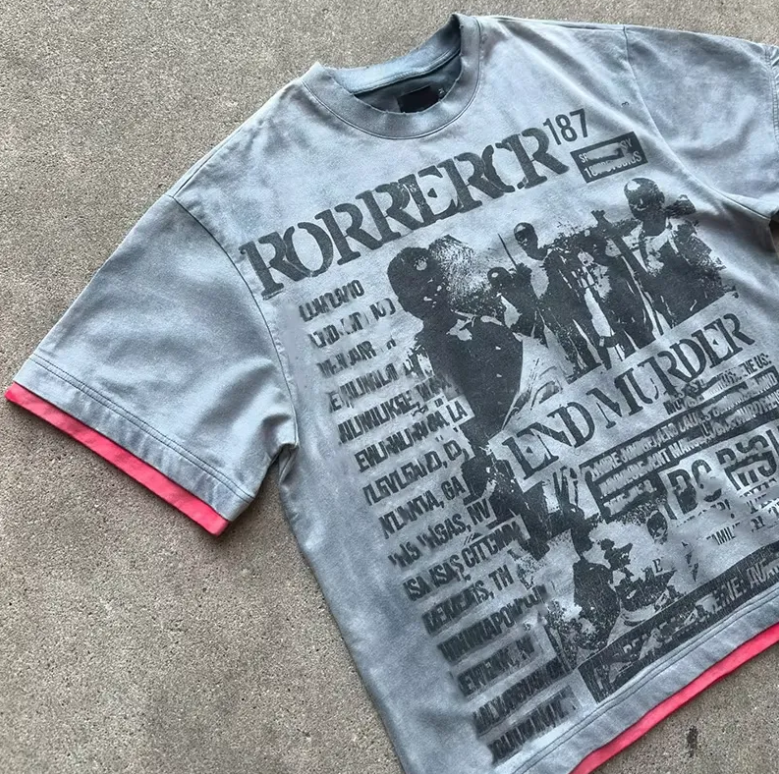
A few years ago, a friend launched a small streetwear brand. His first batch of t shirts looked great out of the package. The fabric felt nice. The prints were sharp. But after customers washed them three or four times, the complaints started. “The neck is all stretched out,” one wrote. “It looks like a wavy bacon strip,” said another. My friend was crushed. He had spent his savings on that first order. I looked at the shirts and saw the problem immediately. The neck ribbing was low quality. It had poor recovery, meaning it stretched and never bounced back. That small detail ruined the whole garment. That experience taught me that neck ribbing might seem minor, but it makes or breaks a t shirt.
More Than Just a Strip of Fabric
Neck ribbing is the band of fabric sewn around the neck opening of a t shirt. It is usually made with a special knit construction, often 1x1 or 2x2 rib, that gives it natural stretch and recovery. Unlike the main body fabric, which may have little elasticity, the ribbing needs to stretch when you pull the shirt over your head and then snap back to its original shape. Good ribbing contains a small percentage of spandex or elastane, typically 5 to 10 percent. The rest is usually cotton or polyester. The knit density also matters. Tighter knitting creates a firmer, more durable band. A poorly made ribbing may look fine on the shelf, but after a few washes, the elastic fibers break down, and the band loses its ability to return to size. That is when you get the dreaded “bacon neck.”
Good Recovery Keeps the Neck From Going Wavy
Durability of the neckline depends almost entirely on the ribbing quality. The key property is recovery, or the ability to return to original length after being stretched. In garment testing, a good ribbing should survive dozens of stretches without permanent deformation. Low quality ribbing often uses too little spandex or poor grade elastic fibers that degrade quickly. Another factor is the stitch type. A coverstitch with a taping or stay tape inside the seam can reinforce the ribbing and prevent it from over stretching. Factories that skip this reinforcement to save money produce shirts that fail early. Also, the ribbing must be cut and sewn with the correct tension. Too tight, and the neck will curl. Too loose, and it will flare. A manufacturer that does strict quality checks will test their ribbing shrinkage and recovery before bulk production. This is the kind of detail that separates a $10 t shirt from a $30 t shirt.
A Crisp Neckline Signals Quality to the Customer
Let us talk about appearance. When a customer picks up a t shirt, the neckline is one of the first things they notice. A smooth, flat, even ribbing signals quality. It tells the customer that the brand cares about details. A wavy, puckered, or stretched neckline does the opposite. It screams cheap. Even if the rest of the shirt is well made, a bad neck ribbing ruins the whole look. In addition to looks, comfort matters. The neck is a sensitive area. Rough ribbing can chafe and irritate skin. Ribbing that is too tight feels constricting. Ribbing that is too loose feels floppy. High quality ribbing uses fine gauge knitting and soft yarns. It lies flat against the skin without digging in. For brands that want to build loyalty, this subtle comfort keeps customers coming back.
Why Consistent Ribbing Requires Skilled Pattern Making
Here is something many brand owners do not realize. The ribbing cannot be chosen in isolation. It must match the main body fabric. If the body fabric shrinks 5 percent after washing but the ribbing shrinks only 2 percent, the neckline will pucker. If the body fabric is heavy and thick, the ribbing must be strong enough to hold it. This matching requires skilled pattern making and fabric testing. A good factory will test the shrinkage of both the body fabric and the ribbing together. They will adjust the pattern and the sewing tension accordingly. In the service process of a mature manufacturer, steps like “Choose Fabrics & Colors” and “Confirm design” include these technical evaluations. The factory will produce a sample, then check it. If the neck puckers, they go back and fix it before bulk production. This attention to detail is what you pay for when you choose an experienced partner.
Let a Quality Manufacturer Handle the Small Things That Make a Big Difference
After seeing so many t shirt failures caused by bad neck ribbing, I have become a believer in working with factories that sweat the small stuff. Neck ribbing is a tiny part of the garment, but its impact on durability and appearance is huge. It affects whether a t shirt looks premium or cheap, whether it lasts a year or falls apart in a month. When you partner with a clothing manufacturer that has years of experience, strict quality assurance, and a complete service process, you avoid these hidden traps. Xinsheng Garment has over 17 years of experience in men‘s apparel manufacturing. They serve more than 10,000 partners and have a monthly capacity of 415,000 pieces. They offer free samples, and their quality assurance ensures that every detail, including neck ribbing, meets high standards. Their 10 step service process covers everything from fabric selection and pattern making to bulk production and shipping. By trusting a factory that understands the impact of neck ribbing, you protect your brand’s reputation. Customers may not know why a t shirt feels good and lasts long, but they notice when it does not. Give them the quality they deserve.
Table of Contents
- The Tees That Looked Worn After Three Washes
- More Than Just a Strip of Fabric
- Good Recovery Keeps the Neck From Going Wavy
- A Crisp Neckline Signals Quality to the Customer
- Why Consistent Ribbing Requires Skilled Pattern Making
- Let a Quality Manufacturer Handle the Small Things That Make a Big Difference