
 EN



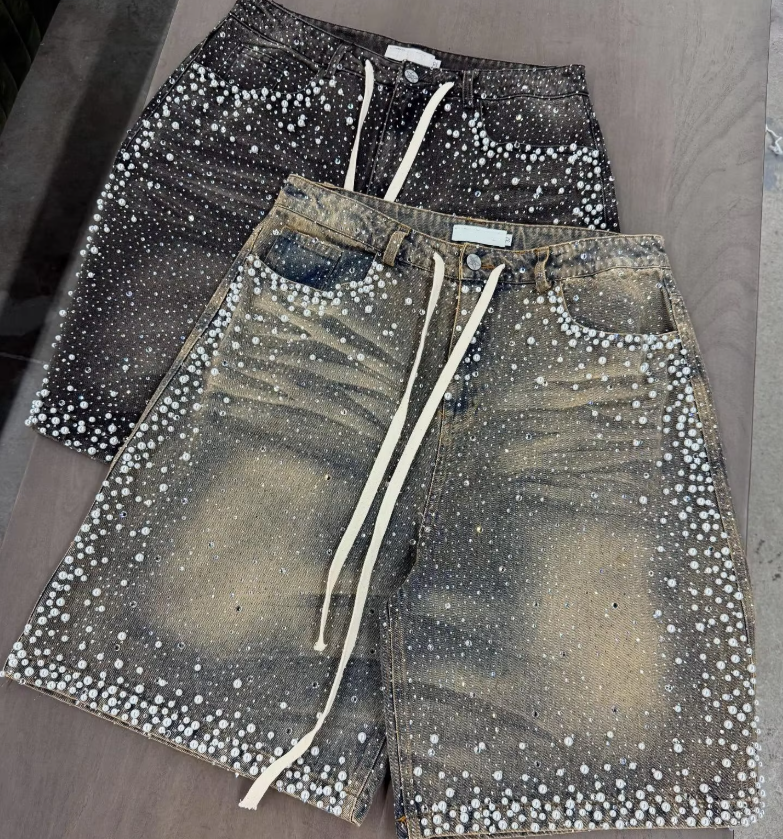
Start With How the Jorts Will Be Worn
Custom jorts are not just cut-off jeans. The weight and stretch decision starts with wear context. A pair for summer streetwear, a pair for skate, a pair for a relaxed resort drop, each puts different demands on denim. Skate needs abrasion resistance and a hem that holds up. Summer fashion needs drape and breathability. A baggy silhouette needs enough body to keep shape, but too much weight can feel stiff and hot. Buyers should define length, rise, leg opening, wash, and intended season before picking a fabric. Otherwise the fabric choice becomes a guess.
Denim Weight Sets the Structure and the Heat
Denim weight is usually stated in ounces per square yard. A 10 to 11 oz denim feels lighter and breaks in faster. It suits shorter jorts, relaxed summer styles, and softer washes. A 12 to 13 oz denim is a middle ground. It holds a boxy leg, supports raw hems and cuffs, and still wears comfortably after a few washes. A 14 to 15 oz denim gives a heavy, structured look. It can support wide legs and workwear details, but it takes longer to soften and can be warm in humid weather.
Weight also affects sewing. Heavy denim needs stronger needles, adjusted stitch density, and more careful seam planning at the rise and hem. A factory that runs the same settings for 10 oz and 14 oz will get skipped stitches or bulky seams. The weight number is a production variable, not a label claim.
Stretch Percentage Changes Fit, Recovery, and Sewing
Stretch denim is measured in percentage. Rigid denim has little to no stretch. Comfort stretch often sits around 2 to 5 percent. High stretch can go higher, but for jorts too much stretch can cause sag at the seat and knee. The fabric may feel great in the showroom and lose shape after a few wears. Recovery is the key. A denim with good recovery returns to its original shape. A denim with poor recovery grows and stays grown.
ASTM D3107 covers stretch properties of fabrics woven from stretch yarns. The test helps compare how a fabric stretches and recovers, but it does not replace a wear trial. Buyers should ask for stretch and recovery data, then confirm with a sewn sample in the actual jorts construction. Waistband interlining, fly construction, and hem finish all change how stretch behaves.
| Denim weight | Typical jorts use | Structure | Heat and break-in | Main risk |
|---|---|---|---|---|
| 10 to 11 oz | Summer fashion, shorter inseam | Soft, less rigid | Cooler, quick break-in | Hem collapse, poor coverage on loose weaves |
| 12 to 13 oz | Core streetwear jorts | Balanced | Moderate | Shrinkage at waist and length if wash not tested |
| 14 to 15 oz | Wide leg, workwear details | Strong, holds shape | Warmer, slower break-in | Stiff seams, needle damage |
| Stretch level | Fit effect | Recovery need | Sewing note | Risk |
| Rigid, under 2 percent | Clean, vintage feel | Low | Strong seams, less give | Waist may feel tight after wash |
| Comfort, 2 to 5 percent | Easier movement | Medium | Stable stitch, test waistband | Bagging at knee if recovery weak |
| High, above 5 percent | Close fit, active use | High | Careful tension control | Growth and sag in baggy cuts |
A Wash Lot Case Where 12 oz Rigid Denim Moved the Waist
A men's brand once developed a pair of baggy jorts in 12 oz rigid denim. The pre-wash sample fit well, with a relaxed waist and a raw hem. Bulk fabric arrived, and the first wash lot showed a different result. The waist shrank more than expected, the inseam shortened, and the raw hem curled unevenly. The pattern had been cut without enough wash allowance at the waistband and hem. The factory team compared measurements from three wash lots, adjusted the pattern with extra waist and length allowance, and changed the hem finish to a double-turn stitch for better stability. A second wash test confirmed the fit before the balance of the order was cut.
The lesson was not that rigid denim is wrong for jorts. The lesson was that rigid denim needs wash testing before pattern approval. A 12 oz fabric can be a great choice for a structured jort, but only when shrinkage is measured and built into the pattern.
Matching Weight and Stretch to Cut, Length, and Wash
The right combination depends on the cut. A wide leg jort with a raw hem needs enough weight to hang straight. A 12 to 13 oz rigid or comfort stretch denim often works. A shorter, fitted jort may need more stretch for movement, but too much stretch can make the leg look soft. A washed black or acid wash finish can soften heavy denim, so a 14 oz fabric may feel less stiff after processing. A light wash on 10 oz denim can look flat if the fabric lacks body.
Buyers should also think about the waistband and fly. A rigid denim waistband has less give, so the fit block must be accurate. A stretch waistband needs a stable interlining to avoid rolling. The hem is another decision point. A raw hem on heavy denim can be clean and sturdy. A raw hem on lightweight denim can fray too quickly. These are small choices, but they decide whether the jorts feel intentional or improvised.
What to Confirm Before a Bulk Jorts Order
Before a bulk jorts order, buyers should confirm five things:
-
The denim weight in ounces per square yard, measured by a standard method such as ASTM D3776.
-
The stretch and recovery data, ideally with ASTM D3107 results and a sewn sample.
-
Wash shrinkage data from at least two lots, with pattern allowances shown.
-
Sewing settings for the actual weight, including needle size and seam type at the rise and hem.
-
A fit sample after wash, not just before wash.
For brands building a custom jorts program, Xinsheng offers integrated fabric sourcing, sampling, washing, and bulk production under one plan. The practical benefit is a tighter loop between fabric selection, wash testing, and pattern approval, which matters when denim weight and stretch have to stay consistent across a full order.